

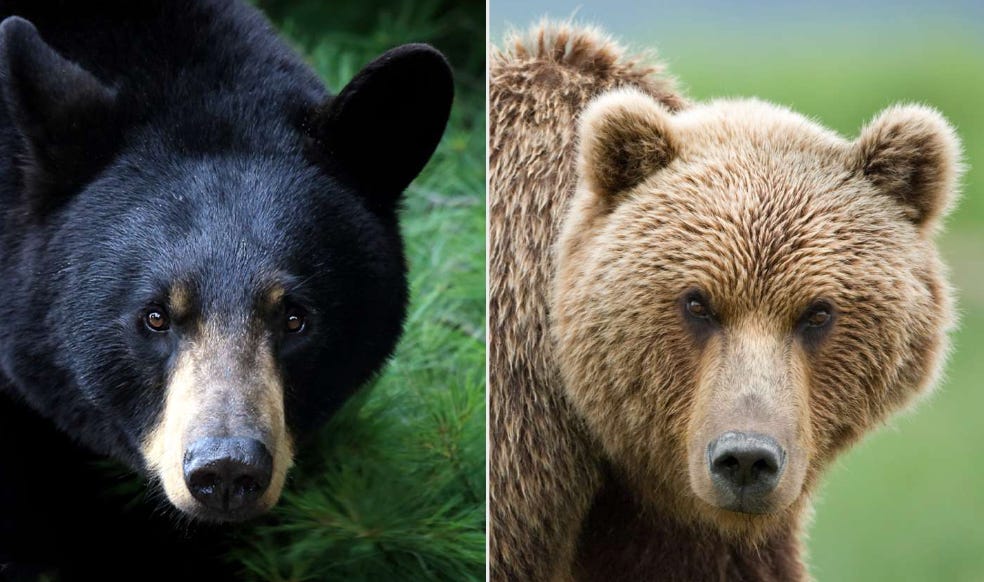
Is it time to re-evaluate our relationship with bears? A three-year-old horror and this summer’s tragedies raise alarms. In the past six months, three deaths in Canada have been attributed to black bears, all of them in northern Saskatchewan. Unprovoked — is how these events were described. A couple outside their remote cabin at McTavish Lake and a uranium exploration worker at Norbye Lake were mauled to death. There have also been reports this summer of black bears going after humans in residential neighbourhoods.
A hiker in Jasper National Park deployed bear spray successfully after encountering female grizzly who “made physical contact” while protecting her cubs. There have been at least three other close calls with grizzlies this summer.
Many bear experts would say there is nothing unusual going on here. The problem is very likely human encroachment. But I’m not so sure.
Obviously, all campers and hikers are not at risk but more bears and closer human proximity can cause serious problems. I have posted below an excellent video from hiker Stuart Howe with updated bear safety ideas. He poses an important question — has something changed in the way these great beasts are relating to humans? The answer is yes. Followed by the question — so what the hell is going on?
A three-year-old bear attack story set the stage for this summer’s events. My blood ran icy cold and my brain went into overdrive imagining the final moments of backcountry campers Doug Inglis and Jenny Gusse who, along with their dog were mauled to death by a grizzly in Banff National Park. On September 29, 2023 — they got just one desperate message off from their Garmin inReach satellite communicator before they were killed. Bear Attack Bad.
Garmin relayed these three scary words to Colin Inglis, Doug’s uncle who’d been monitoring their hiking excursion through the wilds of Alberta. Five hours later, their deaths and that of their dog, Tris, were confirmed by rangers who located their campsite…and remains.
Inglis tells a riveting narrative for Global News. The reporter wrongly IDs Colin as a nephew.
I deeply admire his composure in relating to the world what happened to his nephew and his nephew’s partner. It certainly adds to our understanding of seemingly random bear attacks. It is methodical and forensic.
Park rangers located the bear and killed her — an older, underweight female with low body fat and bad teeth. An empty bear spray canister was found at the scene. Doug and Jenny were both 62, veteran scientists and “meticulous” backcountry hikers who very likely did everything right — except, in my view, stay home. There were no active bear warnings in the area.
The best review I’ve seen on this tragedy was posted on Reddit. The writer underscores the point that Jenny and Doug behaved perfectly and that there is no known reason they were attacked, although the writer offers that their dog could have inadvertently provoked this terrible outcome.
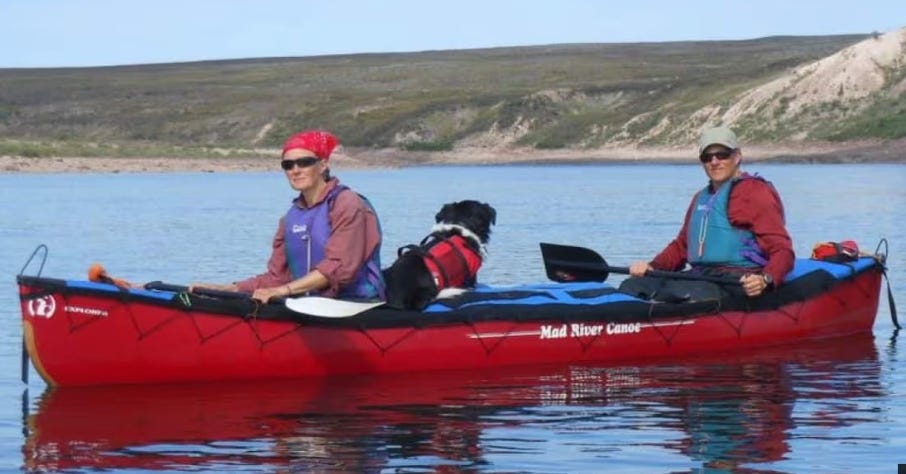
From the UK Guardian Newspaper:
The couple, veterans of the Canadian hinterlands, were well-prepared for their weeklong trip.
“But bears are unpredictable,” said Colin Inglis. “This is a rogue bear. This is something unusual that has happened.”
The family believes the couple were inside their tent, likely reading, when the attack happened. Tris, their seven-year-old dog, would have been snuggled up next to them.
The Parks Canada team found the tent had been crushed with their e-readers inside. But the couple were found outside the tent; neither was wearing boots.
At least one canister of bear spray had been emptied and there was evidence they had tried to scare off the bear.
“There was a struggle, and the struggle didn’t stay in one place. But, in the end, both bodies were back together,” said Colin Inglis. “They were reconnected. That’s who they were. They were together in life, always.”
From Reddit:
Repeating it for emphasis: it doesn’t look like there was anything Doug Inglis and Jenny Gusse could have done differently. Late September is peak bear attack season, as the hungry ones resort to anything to survive……The Red Deer valley is narrow in that area and if you want to avoid wildlife corridors you don’t go at all. They had a dog, and dogs have been known to attract bears, but that wouldn’t account for a sustained predatory attack that killed two people despite firing an entire can of bear spray. A common comment is “they should have carried a gun.” Firearms are illegal in national parks except for government officers but never mind that: they were in their tent, not trying to pick off a charging bear in the open. Under the circumstances they would have been better off armed than not but shooting a grizzly dead in a life-or-death melee on a rainy night is, for the average backpacker, not in the realm of the practical.
Humility. Nature is bigger than us. That’s why we go. Stuart Howe, a Canadian YouTube backpacker, hiked this same trail earlier in the summer and was bluff-charged by an unusually aggressive grizzly a day’s hiking from the attack site. It’s thought-provoking to watch it now, but Stuart got nothing worse than a scare and maybe motivation to hike a bit further that day.
Here is Stuart Howe’s video recorded in the general vicinity of the attack. It is really worth a watch, especially if you camp in bear country. Howe is a very good story-teller and brings wild nature into our digital lives.
I have my own indirect bear injuries from which I still suffer. Psychologically. Here’s why.
About twenty years ago, I found myself outside of Toronto in an unremarkable suburban warehouse sitting knee-to-knee with humans who had survived various kinds of bear attacks. I was single parenting and the gig paid really well.
In a few cases, my interview subjects had even been partially eaten. Some faces and scalps had been rebuilt. A few actual noses had been replaced with prosthetics, attached by magnets over a gaping hole — created when the original went down the gullet of an angry ursus. It remains the stuff of my nightmares.
Bears do go for the face and jaw — even with each other because the wounds can be so disabling. A jawless brown bear can’t do much damage to an aggressive challenger. They approach human invaders with the same tactical moves as they do other bears. Head, face, neck.
The interview subjects would be the narrative basis for an episode of a show called Eaten Alive — later changed to the less horrific — Human Prey. AI claims the series was for Animal Planet — but I recall it was commissioned for Discovery. In the world of tabloid television, it was a winning format, albeit an exploitive one.
Dramatic stories told by real survivors with a connective tissue of cheesy recreations and tension track music. It was released in 2009 and can still be found on YouTube where channel grifters rip it off and post it for clicks and money. Animal attack shows are popular. The survivors are heroic and the heart-pounding drama reconfirms our uneasiness in the wilderness, which is oddly comforting. Watch it below if you dare.
Am I allowed to say that doing those interviews, one after another left me with with a mild case of PTSD? I didn’t know it then because I saw myself as a tough, girl-reporter who never admitted personal weakness but all these years later, I wonder. You absolutely wouldn’t catch me in bear-country wilderness. It’s just something that at this point I couldn’t handle — even though I love nature, desperately.
I love a good walk in the woodlands but not if it is also bear habitat.
About ten years ago, I took my youngest boy — then thirteen — on a trip to Haida Gwaii in B.C. We did fine on the open waters of Hecate Straight in an inflatable Zodiac. No fear. I come from a seafaring background of commercials fisherman and boat builders and being on the open ocean is in my DNA.
But Truman and I bailed on a boardwalk, forest hike out of mutual anxiety about a possible black bear encounter. We couldn’t get out of there fast enough. I think that’s a shame on many levels but I just can’t shake the feelings caused by those interviews.
Bear experts say that most brown/grizzly attacks are defensive. The victim has come upon the beast unexpectedly — perhaps a female with cubs or a grouchy old male guarding delicious carrion. There have been reports of toothaches driving these animals to violence which I fully understand.
Perhaps the most famous victim of a grizzly is bear enthusiast Timothy Treadwell who lived for thirteen seasons amongst the brown bears of the Katmai peninsula in Alaska. His fatal mauling was the focus of Grizzly Man, a brilliant documentary by Werner Herzog. Treadwell’s remains and those of his girlfriend, showed what a forensic pathologist calls predation. But humans as food might have been only the bear’s afterthought.
I’m not sure there is general agreement about what actually caused the attack which occurred at Treadwell’s campsite on a bear trail in grizzly habitat call The Maze. I do know that the pair were found not far from each other which raises horrifying scenarios of a survivor watching their partner go down at the jaws and claws of a relentless attack, knowing that, without a miracle, they were next. She was found near their collapsed and torn tents, partially covered under a mound of twigs and dirt. Treadwell’s remains were discovered a short distance away in the brush.
It should be loudly reported that Amie Huguenard did try to save Tim from the bear. The evidence exists in a partial audio recording of the mauling, never heard by the public but written and talked about by those close to Tim. The tape was locked away in the personal vault of Treadwell’s business partner, Jewel Palovak whom has since destroyed it. Imagine the courage it took to attempt to help Treadwell fight off an attacking grizzly. I have always believed Amie hasn’t received enough credit for this unselfish heroism that ensured she would not escape her own death.
Below is director Werner Herzog listening to audio of Tim Treadwell’s final moments for his film Grizzly Man.
Below is a somewhat cheesy but interesting backgrounder I found on YouTube about Amie — the unsung hero in this story. Even while the bear was destroying her boyfriend Amie didn’t run away to save herself.
Despite high profile grizzly/brown bear attacks, experts report it is black bears who are the real terrorists. They will hunt humans for food and even stalk us undercover until the right moment to strike. They are habituated to us now, less afraid, more pushy.
Stay safe out there and do leave your own bear encounter stories below.
Take your bear spray and know how to use it. Practice before you need it.
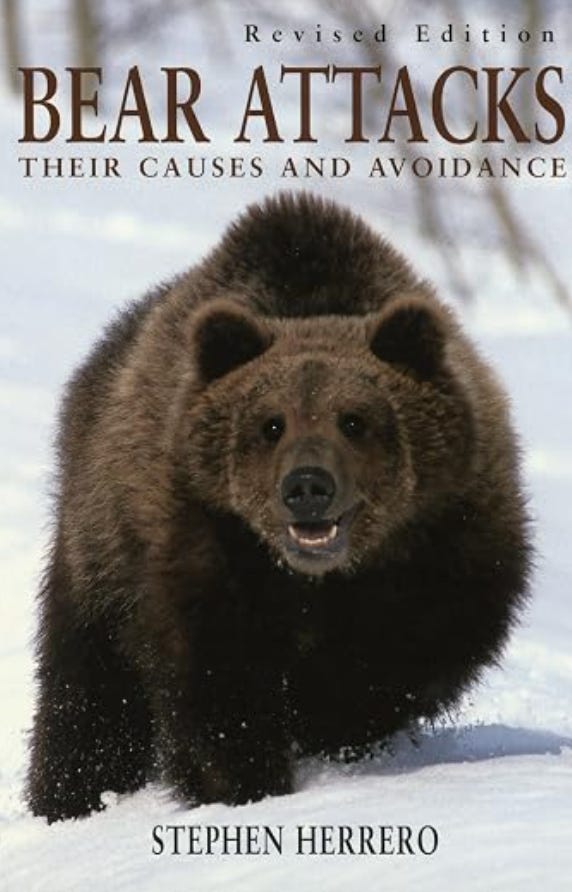
Stephen Herrero’s book on how to survive a bear encounter is the best ever written. I’ll always remember his polite refusal to appear in our bear show because he was worried it would be very sensational. No hard feelings. Dr. Herrero was correct.
Stay critical.
Dear Lord. Sorry Trish but fear monger much? How many people walk in woods do you suppose on any given day in Canada? How many random bear attacks are there? Whatever is driving the peculiar attacks you've mentioned is caused by humans.......I'm not saying the poor couples/ victims are at fault, they did nothing wrong. We live in a rural area and animals are starving like I've never seen, they are covered in mange and tick borne illness, chemtrails daily, our forests are sprayed w glyphosate ffs and who knows what 5g towers etc are doing to the nervous systems etc of these sensitive creatures. It's not a conspiracy, Our government is trying to depopulate us and their environmental tampering it's going to take down animals first. I would still walk in the woods no problem and if I'm killed by a bear then please look after my cat lol.
Wildfires are driving wildlife out of their naturally protected habitat towards, or even into, human occupied areas. Without proper forest management this is the price everyone will have to pay. The bears and other wildlife are severely traumatized and confused having to run for their very survival. Difficult times are ahead if both the forestry and wildlife management sectors don't connect and strategize on how to deal with this matter expediently. This includes better public education AND increasing wildlife interventionists.